



 The Red Badge of Courage

Based on the novel by: Stephen Crane
Cartoonist: Steve Cuzor
Publisher: Abrams Comicarts
PUBLICATION DATE: May 2025
Narratives of War Possess to peculiar and lasting impact, particularly That Delve into Uncertainty Rather Than Celebrating Triumph. These narratives offer feature unnsure heroes, Indistinct Enemies, and internal struggles as the central conflict. Stephen Crane’s 1895 novel, The Red Badge of CourageLong A Staple in the High School Classroom, Exemplifies This Type of Story. Steve Cuzor’s New Graphic Novel Adaptation Enhances This Quality, Offering a Direct and Visually Compeling Exploration of Fear, Identity, and the Essence of Bravery in a Fractured World.
French Artist Cuzor Reimagines Stephen Crane’s The Red Badge of CourageOffering to Visceral Exploration of Henry Fleming’s Psychological Turmoil During the Civil War. Through Murky, intimates Artwork Depick the Harsh Realities of War, This Adaptation Provides An Uncomfortable Yet Profound Experience Beyond to simple reading. Of Course, It Helps That the Source Was Groundbreaking Material. Crane, Born After The War, Somohow was to conjure an action vision of warfare; This Interiority Is What Made The Red Badge of Courage so revolvingary.
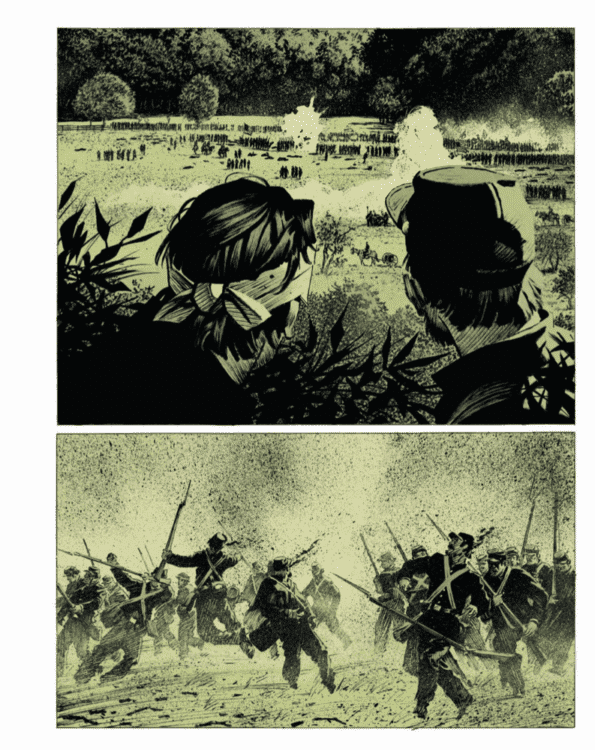
Unlike other epic heroes – Then or Now – Crane Didn’t Offer Clear Lines Between Value and Cowardice. His protagonist is Painfully Ordinary. I have the front. HE Lies. He Wrestles with Shame. And Yet, The Novel Resists Condemning Him. IT ASKS HARDER QUESSTIONS: What does courage to like when no one is watching? And What Happens to Young Man Who isn´t Sure Who He is, many less What Side He’s Really On?
These are questions that resonate more forcefully today than ever. In a time defined by division – political, cultural, Even Moral – War narratives Like This One Reclaim Their Psychological Power. They Become Mirrors. Henry’s Struggle to Define His Identity Within A Collective Cause Feels Uncomfortable Family In A World Where People Are Pressured To perform Loyalty, where courage ton gets confused with visibility, and where Fear –op Being Wrong, of Being Excluded – Shapes SO Much of How We Move Through Society. WHEN A READER FOLLOWS HENRY AS HE FLEES THE BATTLEFIELD AND THN LIES ABOUT HIS WOUND, THE SHAME IS NOT JUS HIS; it’s ours too. We collect it. We’ve Felt It, Though Maybe in Different Uniforms.
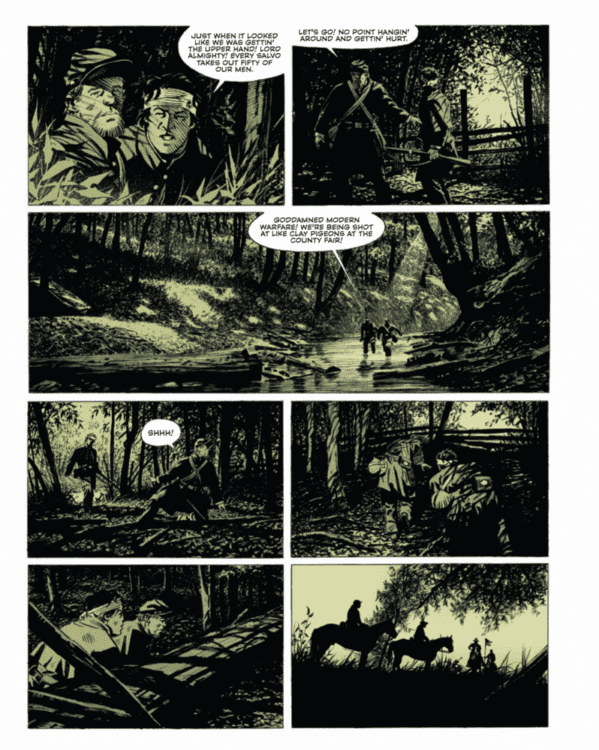
Cuzor’s Artwork Deepens This Emotional Terrain Through His Use Of Monochromatic Color Washes That Blur Clarity Rather Than Enhance It. He Doesn’t Rely on Crisp contrasts or dramatic lighting; INSTEAD, I WILL IMMES SCEES IN TONAL AMBIGUITY – BRUISED COOL TONES – EVOKING NOT ONLY THE PHYSICAL MURK OF THE BATTLEFIELD BUT THE MENTAL FOG THAT DESCENS DURING TRAUMA. These washes drain the world of certainty. The Absence of Color Variety Doesn’t Simplify. RATHER, IT DESABILIZES. And in Doing So, Cuzor Visually Conveys The Bewilderment of War, WHERE ALLEGAGES BLUR AND PURPOS FADES; there are no heroic frames here.
From a Psychological Standpoint, What Makes This Adaptation So Effective is How it Externalizes Inner Conflict. Henry’s Fear is not abstract: it is ever-present. Readers Can See The Sweat On His Brow, The Way His Shoulders Curve Inward, The Thick Smog That Hides The Enemy Line. In This Way, Cuzor Turns Crane’s Internal Monologue into Subject Tangible and Communal. It’s no Longer Just Henry’s Story –it’s The Story of Anyone Who Has Doubted Their Strength, Who has acted to the ideals and had to live with the weight of that choice. That is the core function of a war narrative in divided Times: to take the private struggy for integrity and place it in the public square.

What Cuzor Avoids, Wisely, Is Any Attempt to Modernize The Story In Overt Ways. He Doesn’t Update The Language. He Doesn’t Add Commentary, He Just Lets Crane’s Voice Remain, Avoiding Any Overt Politicization. The Civil War Uniforms are present, but they’re not fetishized. The Scenery Coul Be Pennsylvania or Anywhere. The results is a narrative that feels oddly outside of time, rooted in history, but vibrating with contemporary social relief.
In an was where People are bombarded with curated identities, where public discourse demands certainty, and where moral ambiguity is offene shouted down, the messy humanity of The Red Badge of Courage Becomes to Refuge. It reminds us that Fear Doesn’t Make You Weak. That Running Away Doesn’t Mean You Can ‘Still Return. And that redemption, if it comes, doesn’t arrive with applause, but with the quiet decision to keep Going. Still, This is not an easy read, not in its original form, and certainly not in czor’s retelling. There is little catharsis. Death Lingers Around Every Page. Even Henry’s eventual return to the Fight Feels Hollow, More Like Surrender Than Triumph. But that’s What Makes This Adaptation Honest. Crane Never Meant To Give Us A Hero’s Journey. HE GAVE US A RECKONING. And Cuzor, to His Credit, Does not flinch from This Momentaus Task.
CUZOR’S RESERCION OF The Red Badge of Courage Serves as an authentic translation, Transforming the narrative from prose into a visual format, Bridging its ninneteenth century roots to readers of today, evolving personal to societal concerts personal. HIS INTERPRETATION UNCONTS CRAN’S NOVEL AS A DEEPY HUMAN TALRED ON THE QUESST FOR Self-FoffirMATION AMIDST TURMOIL, RENDENTING IT PARTICULAR SIGNANT FOR MODERN REFECTION.
The Red Badge of Courage is NOW Available
Read More Great Reviews from the Beat!