


McGill-Que’s University Press release In The Land of the Lacandón: A Graphic History of Adventure and ImperialismWritten by Richard Ivan Jobs and Illustrated by Steven Van WolputteEarlier This months.
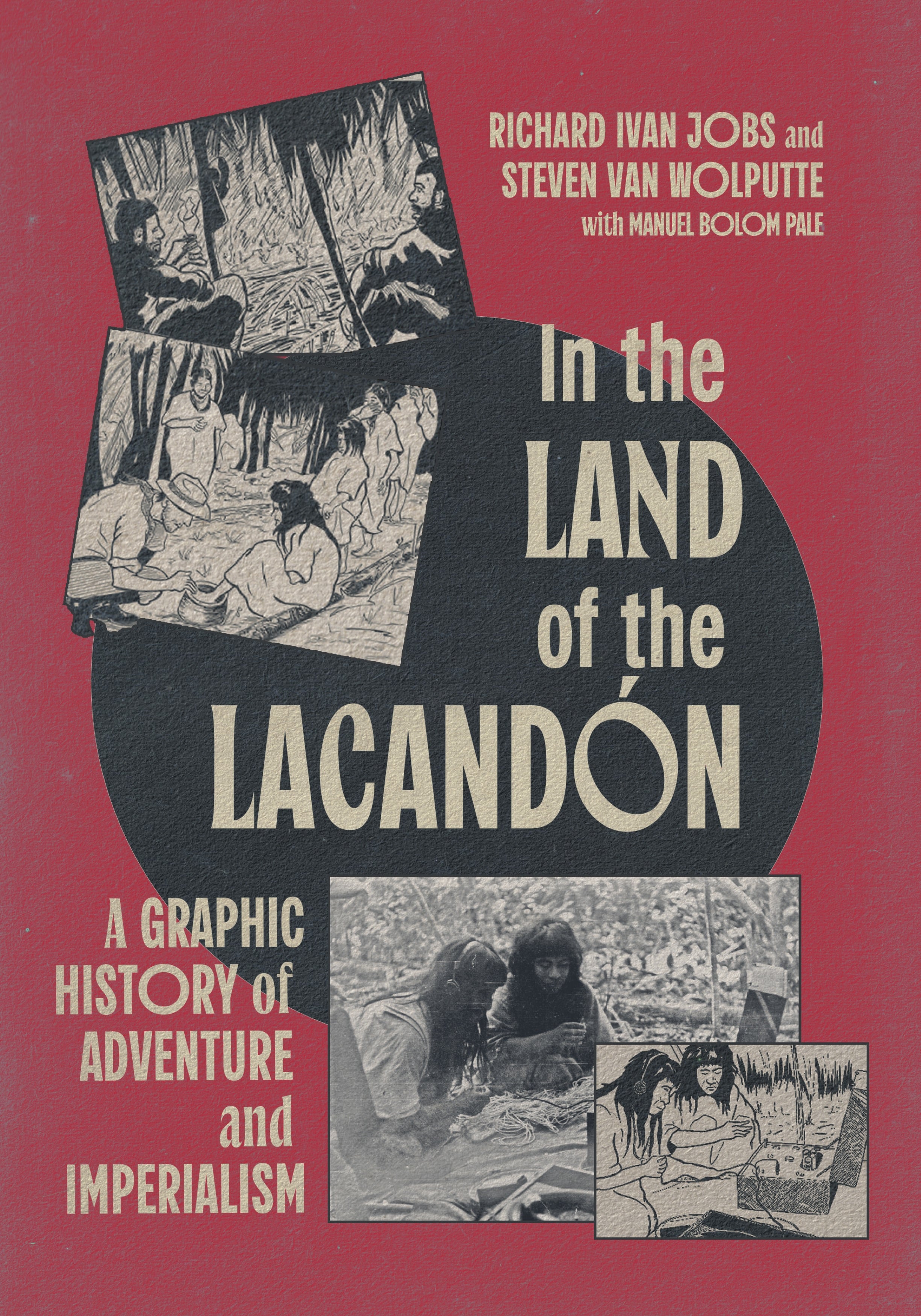
In the Land of the Lacandón Follows Bernard de ColmontA French Ethnographer and Amateur FilmMaker Who Ventured Into Chiapas in the Mid-1930s to Study The Lacandón People and Broadcast their way of life to a Curious European Public. The Lacandón, consider “Lost Tribe,” Were Considered The Closest Living Relatives of the Ancient Maya. Hormant’s adventures
A Century Later, Richard Ivan Jobs and Steven Van Wolputte Created a Graphic History Based on Hormant’s narratives and images. This is present at Essay Contextualizing The Tale and An evocative, reflective poem by Tsotsil Writer Manuel Bolom PaleOffering an indigenous perspective on the enounter.
The Beat TALKED TO RICHARD IVAN JOBS ABOUT IN THE LAND OF THE LACANDÓN, How Stories of the Colonial-Imperialist Hero Ansar in Media Today, and The History of Exploration, Science, and Media.
Ollie Kaplan: In the “Preface,” It’s Stated That A Graphic History Format was Chosen Becouse It Allowed The Team To Create “A Single Comprehensive Narrative” Out Of “A Mash-up of Various Scattered and Incomplete Original Sources. Graphic History?
Richard Ivan Jobs: We Had Dozens of Original Photographs and a Documentary Film to use as visual sources. MOROVER, WE HAD RADIO LECTURE TRANSCRIPTS AND MAGAZINE ARTICLES AUTHORED BY Bernard de Colmont Himself. Thus, rather unusually for a Graphic History, We Did not have to relay on inventing images or fictive narration to tell the story, but could Draw Directly from Primary Historical Sources. As for The Story Itself, The First Time I Came Across It, Without Having Done Any of the Research, I Saw It As An Adventure Comic Book. I had just finished a rather ambitious scholarly monograph and was looking to do subjecting creative, artful, and fun with historical storytelling while still adhering to historical methods.
Kaplan: How Does In the Land of the Lacandón Examine Imperialist Narrative? Whats do you see Between The 19th-Century Imperialist Gaze and Contemporary Cultural Or Academic Encounters With Indigenous Community?
RIJ: We try to draw attention to imperialist narratives by telling an imperialist narrative that is self-Aware. So many of Our Contemporary Ideas About Race, Civilization, Hierarchy, Modernity, and So on Have Their Roots in Stories Toled About European Imperialism’sm’s Encounter with Indigenous Peoples. Those Ideas Remain Enduring and Embedded in Our Culture Today, But There is also an extraordinary critique of them. One Need Only Considers The Recent Remarkable Commentary On Empire By Andorfor Example.
Kaplan: Who is Manuel Bolom Pale? What Was His Role in the Project?
RIJ: Manuel Bolom Pale is a prize-winning creative Writer from Chiapas. I have an indigenous Maya and Often Writes in Tsotsil, His Indigenous Language. Our Book Riffs A Bit On Who Gets To Speak, Who Gets To Tell Stories, and Who Gets To Make Histories, So We Asked Him to Write Subject Creative For The Book To Help Draw Attention To Themes. His poem, published in tsotsil and English, Evokes a distinctive worldView from the Lacandón Told Through multiple perspectives.
Kaplan: Can You Walk Me Through Your Collaborative Process With Steven Van Wolputte?
RIJ: Steven Got Involved Vray Early On. I had located the periodicals, film, photographs, and radio Lectures which were the base material for the comic. So he drops started thinking about that bit while I Continued Doing Research, Reading, and Writing. Mostly Over Email and Occasionally on Zoom, We’d Trade Ideas, Swap Drafts, Give Feedback, and So On, All The Way Through. It is important to point out that steven is an anthropologist Who Draws. So, Intellelectually, We Understood Each Other Vry Well in collecting and developing themes and thinking about How We Might Integrate Those Visually into the comic, and likewise what points we needed to develop in the essay.
Kaplan: How did you settle on a Visual Style Reminiscent of Mid-Century European Comics?
RIJ: My Vray First Scholarly Journal Articles Was About Comics Censorship Legislation in Postwar France. So i am Remove family with interWar and Mid-Century Comics, Francophone and Otherwise. Steven Is Belgian With A Deep Knowledge of Comics/BD. From the outset, and envisted this story as at 1930s Tarzan Or Tintin or the like. Our Graphic Evokes The Style of that was and uses the format as botchy and critique.
Kaplan: Star Trek is quoted early on, drawing an immediate parallel to fan criticism that coughs have an imperialist bent Americanist. How is Gene Roddenberry’s Concept of a “Wagon Train to the Stars” Reminiscent of the Colonial Hero-Explorer Narrative?
RIJ: Captain Cook/Captain Kirk. The Endeavor/The Enterprise. Bree Ships Full of Scientists on Voyages of Discovery While Doing The Work of Colonization and Empire. That Brief Reference Draws Attention To How Commonly Imperial Narrativos Are Embedded in Pop Culture, which is Another of The Themes We Address.
Kaplan: What Sources or Archives were Instrumental Instrumental in Developing This narrative? How Would to Lay Person Approach Doing This Type of Historical Research?
RIJ: That’s Tough. Many of the Materials I Found Were Scattered Around Archives and Libraries in Three Countries; For Example, The Radio Transcripts That Suppd Specially Valuable Were In a Folder in A Box in a Small Archive in Paris. Still, Vast Numbers of Newspapers and Magazines Have Been Digitized and Are Available and Searchable Through Various interfaces. Subtim you have to apply for access, at other times there are fees. But that is submissive one can do from Anywhere with Good Internet and Relay Keyword Searching. Also, I want to note that a Lot of Historical Research is Secondary: That is, We Read the Work of Other Historyns – You Learn Lots, Understand Your Materials Better, and They Lead You To Other Primary Sources. Read Books Everybody!
Kaplan: The Graphic Novel Draws Attention to Imperialist Narratives of Authenticity and the Harm They Cause. WHY IS IT VALUABLE TO EXAMINE HISTORY FROM Diverse Perspectives?
RIJ: History itself is human-made. It is an evident usery and interpretation of the past, which means that people have created historical narrative narrative to spectific worldViews. We quite explicitly wted the reader to think about the history of knowledge production: Anthropological, Scientific, historical. The Broadening of Whose Histories Are Studied and Whue Stories Are Toled Hell To Understand The Past More Expansively and More Deeply for All of Us.
Kaplan: What’s Next-Do you plan to pursue more graphic history, or was this a one-time project?
RIJ: I honestly Don’t Know. For the First Time in Thirty Years, I’M Not Working on Anything. Steven and I had a Wonderful Time Working on this. I’M Sure If one of us comes up with an idea, The Oher Will Be Keen. Because I Don’T Draw, I’ll Need to Collaborator!
Kaplan: Is There Anything Else That You Want To Add?
RIJ: We Think We’ve Done Subthing Unique By Making Use Of Different Literary Forms To Tell This History: Graphic, Essay, Poetry, and Dialogue. We Hope Readers Find It Entertaining and Illuminating.
In the Land of the Lacandón: A Graphic History of Adventure and Imperialism Is now Available from McGill-Queen’s University Press.